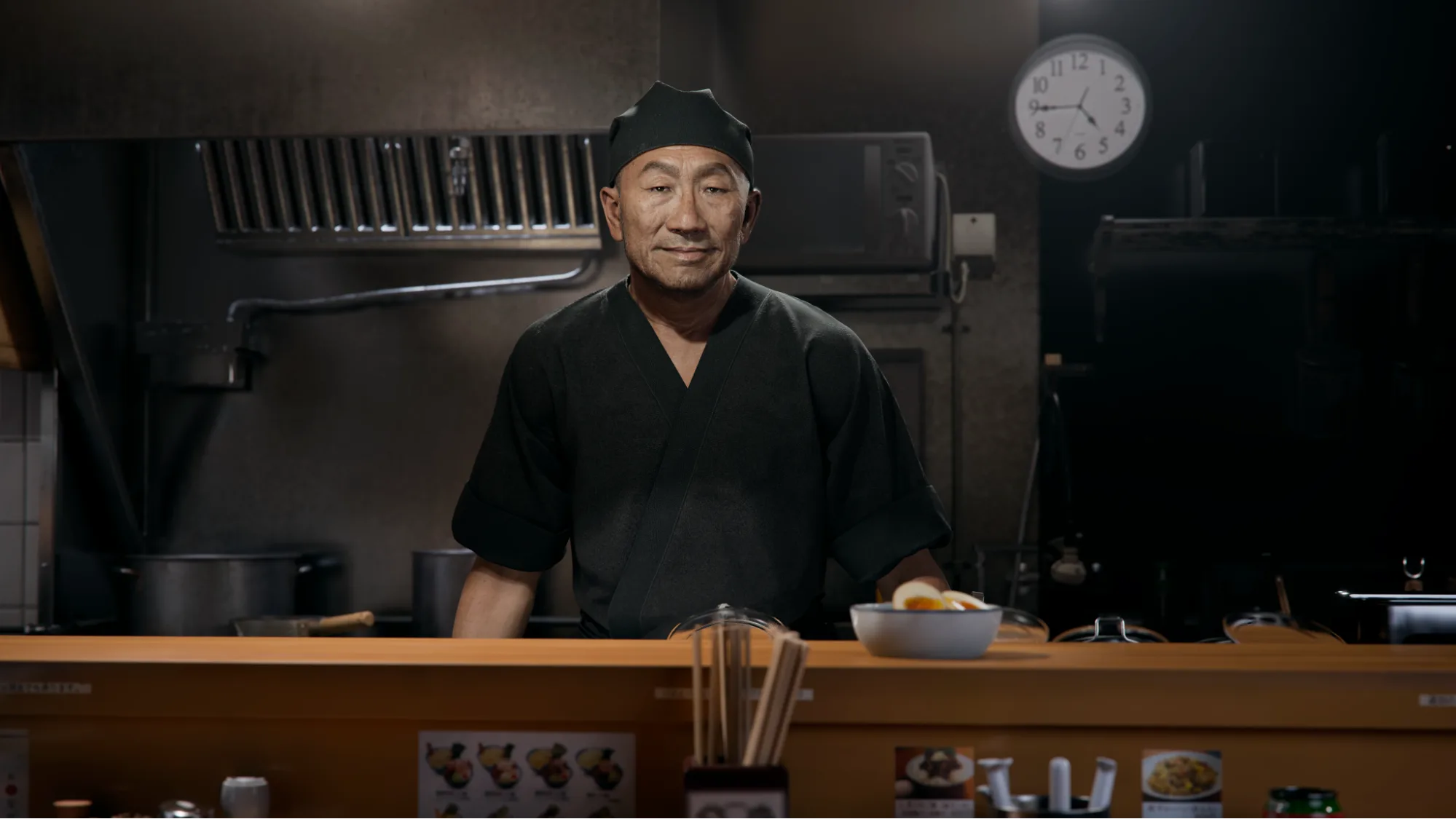
Nvidia has released DLSS 4.5 Ray Reconstruction, an update to the part of its upscaling stack that cleans up ray-traced and path-traced images. It began rolling out during Gamescom week as part of the company's GeForce presentation, is distributed through the Nvidia app, and works on every GeForce RTX GPU from the 20-series onward.
Ray Reconstruction is the piece of DLSS that swaps the hand-written denoisers games traditionally use for ray tracing for a single AI model trained on Nvidia's own hardware. The pitch for the 4.5 version is a larger, more capable model rather than a new feature.
What Nvidia is claiming
By Nvidia's own numbers, the new model has about 35 percent more compute capability and processes around 20 percent more parameters than the version it replaces, while keeping performance roughly the same. In practice that is a bet that the denoiser has been the limiting factor on image quality in the hardest path-traced scenes, and that spending more of the frame budget there is worth it.
Around 30 games support it at launch, including the usual showcase titles for this kind of technology. Nvidia also used the moment to note that more than a thousand games and applications now support its RTX features in some form.
What to watch for
The interesting question is cost on older and slower cards. A bigger model that holds its frame time on a high-end GPU does not automatically hold it on an RTX 2060 or a thin-and-light laptop chip, and "similar performance" is an easy claim to make at the top of the stack. The early independent testing will be worth reading before turning it on everywhere.
It is also a reminder of how Nvidia now ships graphics improvements: not with a driver tied to a hardware launch, but as model updates pushed through an app, decoupled from any new silicon. In a year with no new gaming architecture from any vendor, that cadence is doing a lot of the work.